What is on the package
Why your ground beef is not required to name a country
Two federal rules decide what a meat package may leave unsaid. One was repealed in 2016. The other took effect this year, and it is optional.
The same four words, two different meanings
Until December 31, 2025
- Animal born in another country
- Animal raised in another country
- Animal slaughtered in another country
- Meat repackaged or further processed in a U.S. plant
The package was allowed to print
Since January 1, 2026
- Animal born in the United States
- Animal raised in the United States
- Animal slaughtered in the United States
- Meat processed in the United States
Only now may the package print
Go open your freezer. Pick up the last package of beef you bought at a supermarket and look for the name of a country on it. On most of them there is not one. That is not an oversight, and nobody is hiding anything from you. It is the default that two federal rules leave in place.
This is a short piece about those two rules: what they used to require, what they require now, and what a package is telling you when it says nothing at all. By the end you will be able to read a label in about four seconds, and you will understand why a sentence as flat as “100% U.S. sourced meat” is doing more work than it looks like it is doing.
Rule oneThe label that used to be mandatory, and is not anymore
For nearly seven years, American grocery stores were legally required to tell you where the beef came from.
The rule was called country of origin labeling, COOL for short. USDA published the final rule for all covered commodities on January 15, 2009, and it took effect on March 16, 2009. Covered commodities included muscle cuts of beef and veal, lamb, chicken, goat and pork, plus ground beef, ground lamb, ground chicken, ground goat and ground pork, wild and farm raised fish and shellfish, fresh produce, macadamia nuts, pecans, ginseng and peanuts. If you bought a steak, the store had to name the country.
Canada and Mexico took the United States to the World Trade Organization over it and won. On December 7, 2015, WTO arbitrators set the maximum permitted retaliation at 1.05 billion Canadian dollars a year for Canada and 228 million U.S. dollars a year for Mexico. On December 21, the WTO authorized both countries to retaliate.
Congress settled it in the Consolidated Appropriations Act, 2016, which amended the law to take beef and pork out. USDA's Agricultural Marketing Service published the conforming rule on March 2, 2016. The operative sentence is short, and it is the reason your freezer looks the way it does.
“Retailers are no longer required by the rule to provide country of origin information for the beef and pork that they sell, and firms that supply beef and pork to these retailers no longer must provide them with this information.”
USDA Agricultural Marketing Service, Removal of Mandatory Country of Origin Labeling Requirements for Beef and Pork Muscle Cuts, Ground Beef, and Ground Pork, final rule, 81 FR 10755, effective March 2, 2016. Read the rule
Notice how narrow that is. Lamb, chicken, goat, and wild and farm raised fish and shellfish stayed on the list. They still have to name a country at the retail counter. Beef and pork walked out of the room, and they are the two you buy the most of.
- March 16, 2009Mandatory country of origin labeling takes effect. Beef and pork are covered.
- December 7, 2015WTO arbitrators set retaliation at 1.05 billion Canadian dollars for Canada and 228 million U.S. dollars for Mexico, per year.
- March 2, 2016Beef and pork are removed from mandatory country of origin labeling. Lamb, chicken, goat, fish and shellfish stay in.
- March 18, 2024USDA publishes a new federal definition of the words “Product of USA” on meat.
- January 1, 2026That definition becomes enforceable. Using it stays voluntary.
✓Still has to name a country at retail
- Lamb, and ground lamb
- Chicken, and ground chicken
- Goat, and ground goat
- Wild and farm raised fish and shellfish
- Perishable agricultural commodities, peanuts, pecans, macadamia nuts, ginseng
✕Removed on March 2, 2016
- Beef muscle cuts, and ground beef
- Pork muscle cuts, and ground pork
The two categories Americans buy the most of are the two that came off the list.
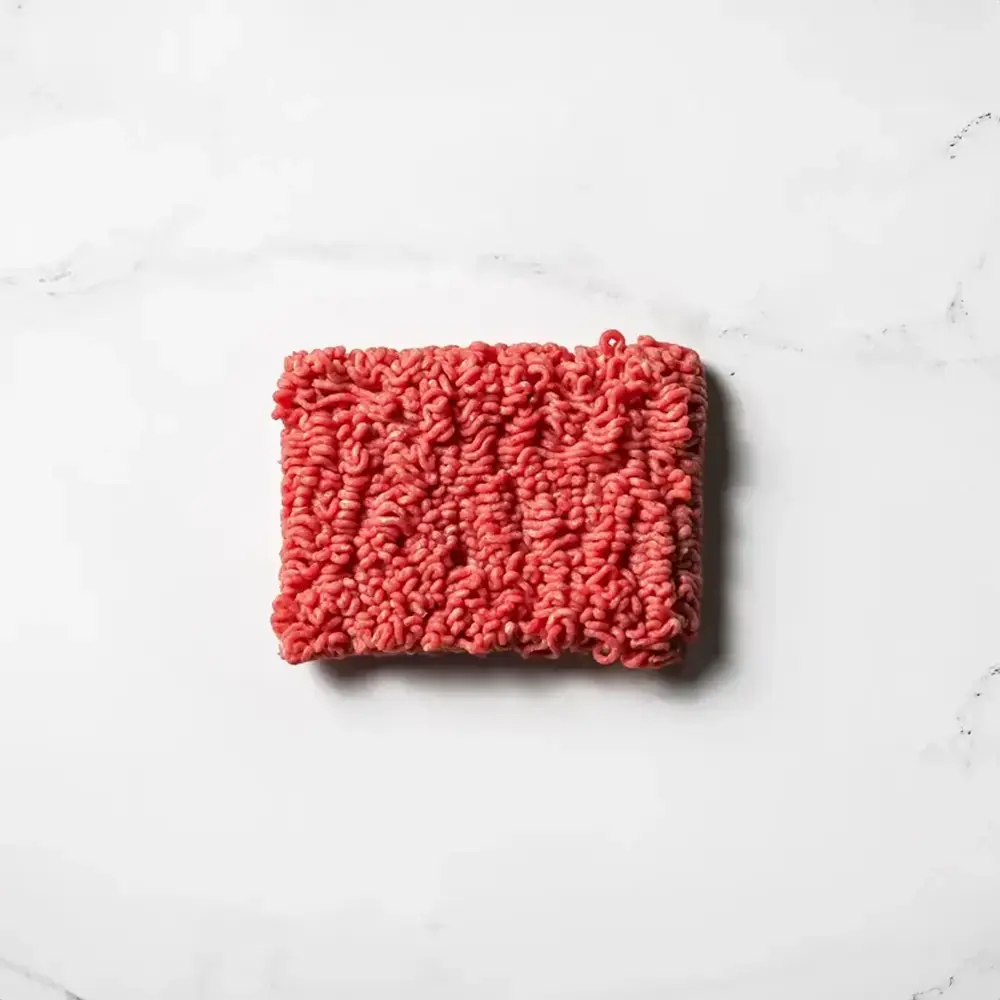
Rule two“Product of USA” used to mean almost nothing. That changed this year.
Here is the part most people find hard to believe, so it is worth quoting the government on itself. Until the end of last year, the phrase “Product of USA” on a meat package had no requirement attached to where the animal came from. It only required that something had happened to the meat here.
“Under current FSIS policy, products with a ‘Product of USA’ or similar claim must, at a minimum, have been processed in the United States. For instance, currently, cattle born, raised, slaughtered, and processed in another country may be labeled ‘Product of USA’ if the meat was merely further processed in the United States.”
USDA Food Safety and Inspection Service, final rule, 89 FR 19470, March 18, 2024, describing the policy it was replacing. Read the rule
The same document explains the mechanism plainly: imported meat that is repackaged or reprocessed in an inspected plant here is “deemed and treated as domestic product for labeling purposes.” A carton crosses a border, a plant opens it, and on the other side of the room it is domestic.
USDA fixed that. It commissioned a consumer survey, found that most shoppers already believed the phrase meant the animal was born, raised, slaughtered and processed here, and wrote that belief into the regulation. The final rule published on March 18, 2024. Establishments had until January 1, 2026 to comply. Since that date, on a single ingredient product, the words mean exactly what you thought they meant all along.
“Product of USA” and “Made in the USA” may now appear on a single ingredient meat, poultry or egg product only if it is “derived from animals born, raised, slaughtered, and processed in the United States.”
USDA Food Safety and Inspection Service, 89 FR 19470. Effective May 17, 2024, compliance date January 1, 2026.
Good rule. Long overdue. And it comes with a catch that decides everything else on this page.
“The final rule does not establish any mandatory country of origin labeling requirements. Producers are not required to make these claims.”
USDA Food Safety and Inspection Service, 89 FR 19470, responding to comments on the final rule.
So the strong sentence is now honest, and printing it is a choice. A company that can say it, says it. A company that cannot, says nothing, and saying nothing has never been against any rule.
The four second testThree things a package can say. They are not the same promise.
Strongest
“Product of USA” or “Made in the USA”
Since January 1, 2026 this is a federally defined statement on a single ingredient meat: the animal was born, raised, slaughtered and processed in the United States. Four steps, no gaps.
Partial
“Prepared in the USA,” “Sliced and packaged in the USA”
Still allowed, and still useful, but it is a claim about a step, not about the animal. The rule requires such a claim to name the preparation and processing steps that actually happened here.
Most common
No origin claim at all
For beef and pork, this is the default and it is perfectly legal. The package is not required to name a country, the retailer is not required to tell you, and the supplier is not required to pass the information along.
One more thing worth knowing, because people misread it constantly: the USDA mark of inspection is a statement about the plant, not about the animal. Imported meat repackaged or reprocessed in an inspected facility here is, in USDA's own phrasing, “deemed and treated as domestic product for labeling purposes.” The mark tells you the plant was inspected. It does not tell you where the animal lived.
The numbersHow much beef actually crosses the border
None of this would matter much if American beef were a closed loop. It is not. The United States is simultaneously one of the largest beef exporters on earth and, in USDA's own words, “the second largest importer, a majority of which is destined for blending into ground beef.”
4.635 billion lb
Beef imported in 2024. A record, more than 24 percent above the previous record set in 2023.
3.003 billion lb
Beef exported in 2024. Down for the second year since the 2022 record.
Both figures come from USDA's Economic Research Service. And they are not a scandal either. Lean imported trimmings exist because of arithmetic, not conspiracy, which is the next section. But it does mean that in any given week a very large volume of beef is moving into American plants, and no rule obliges the package at the end of that line to mention it.
Where it comes from, by share of U.S. beef imports:
Shares of total U.S. beef imports in 2022. Source: USDA Economic Research Service, Cattle & Beef Sector at a Glance.
That Brazilian share has a story behind it. The United States lifted its ban on fresh Brazilian beef in February 2020, and USDA notes that imports from Brazil have since “grown more than four times.” None of it is illegal. All of it is invisible at the shelf.
The mechanismWhy the trimmings travel
Here is the part that explains the volume, and it is worth understanding because it is the honest answer to “why would anyone import beef into cattle country.”
Ground beef is a blend, and it has to be. Fat percentage is the whole product. Trimmings from older cows run very lean, around 90 percent. Trimmings from grain finished heifers and steers run fatty, around 50 percent. You mix them to land on the number printed on the package.
How a package of 80/20 gets made
90% lean
Trimmings from cows. Supply rises when the national herd is shrinking and more cows go to slaughter.
50% lean
Fattier trimmings from grain finished cattle on feed. Plentiful whenever feedlots are full.
Blended to order. When the herd stops shrinking, fewer cows are slaughtered, the lean side dries up, and demand for imported lean trimmings goes up. USDA's Economic Research Service describes exactly this cycle.
So the imported lean is not a trick. It is a shortage being filled. The trick, if there is one anywhere in this story, is only that the finished package does not have to mention any of it.
What to do about itThe only reliable answer is a company that volunteers it
Put the three facts side by side and the conclusion writes itself.
One: for beef and pork, nobody at the store owes you a country. Two: the phrase that would tell you is now trustworthy, and printing it is entirely optional. Three: several billion pounds a year are moving through the system, mostly into ground beef.
Which means the label is no longer where the answer lives. The answer lives with whoever is willing to put the claim on the front of the business, in public, where it can be checked and where being wrong would cost them everything.
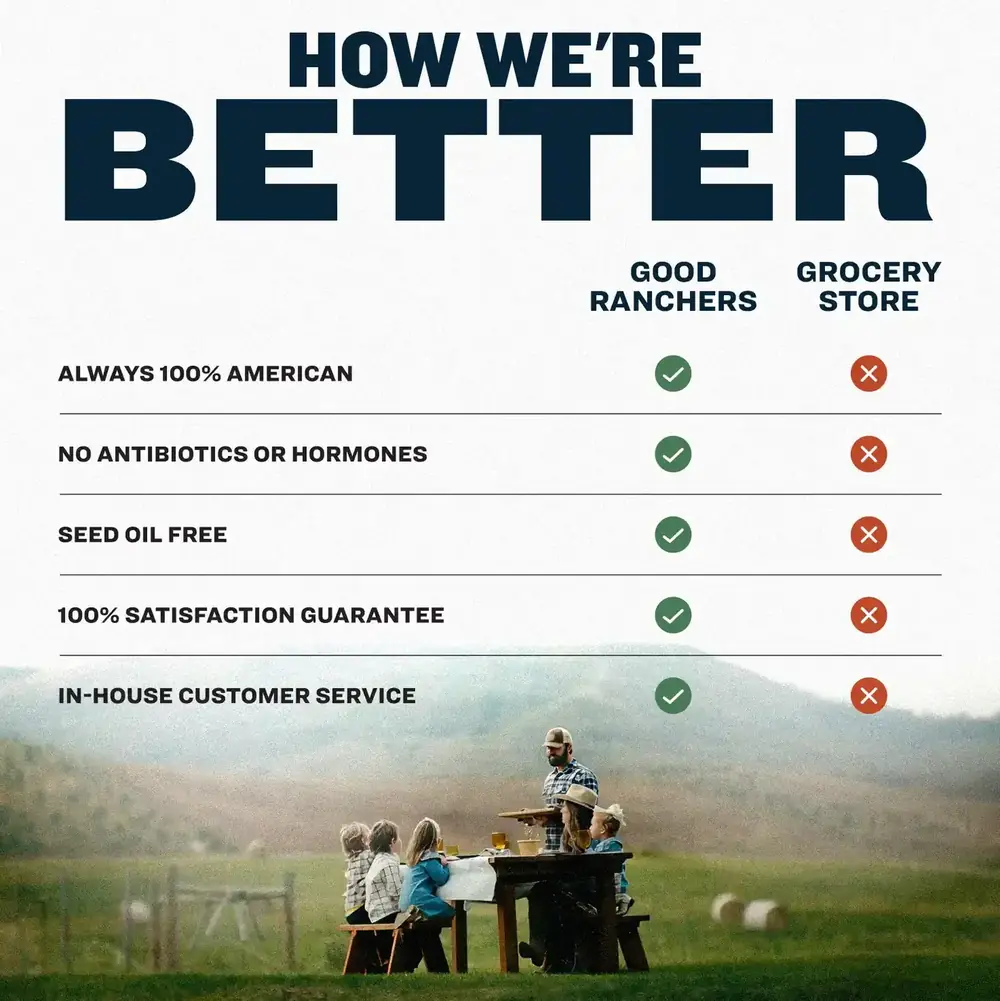
That is not a hypothetical company. Good Ranchers has been running its advertising on one flat sentence, “100% U.S. sourced meat,” since long before USDA got around to defining the words.
The company was started by Ben and Corley Spell, a couple who went looking for honest, quality food to feed their own growing family and did not find it. Their words on their own About page, not ours:
“Due to a broken food system that inflates prices and imports poor quality meat, America's tables haven't been full of great food for a while.”
Ben and Corley Spell, founders. goodranchers.com/pages/about

What they publish about the meat itself
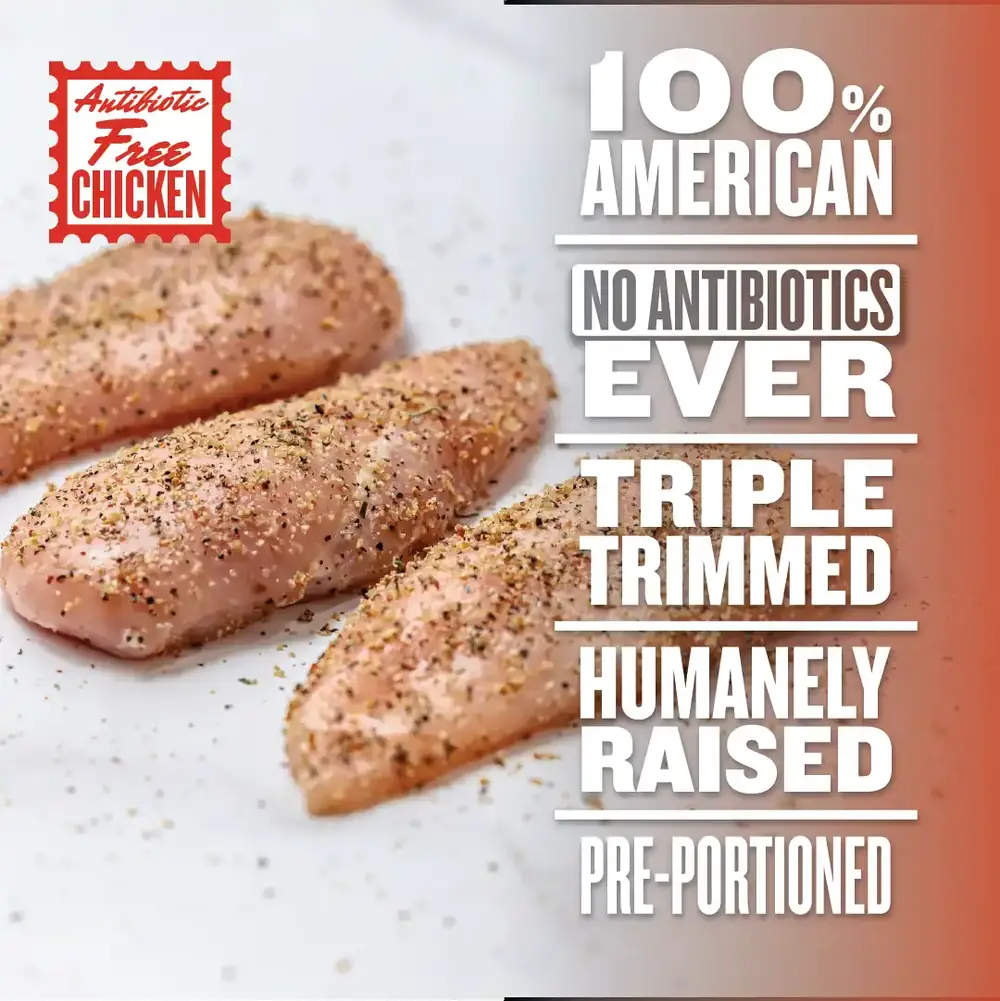
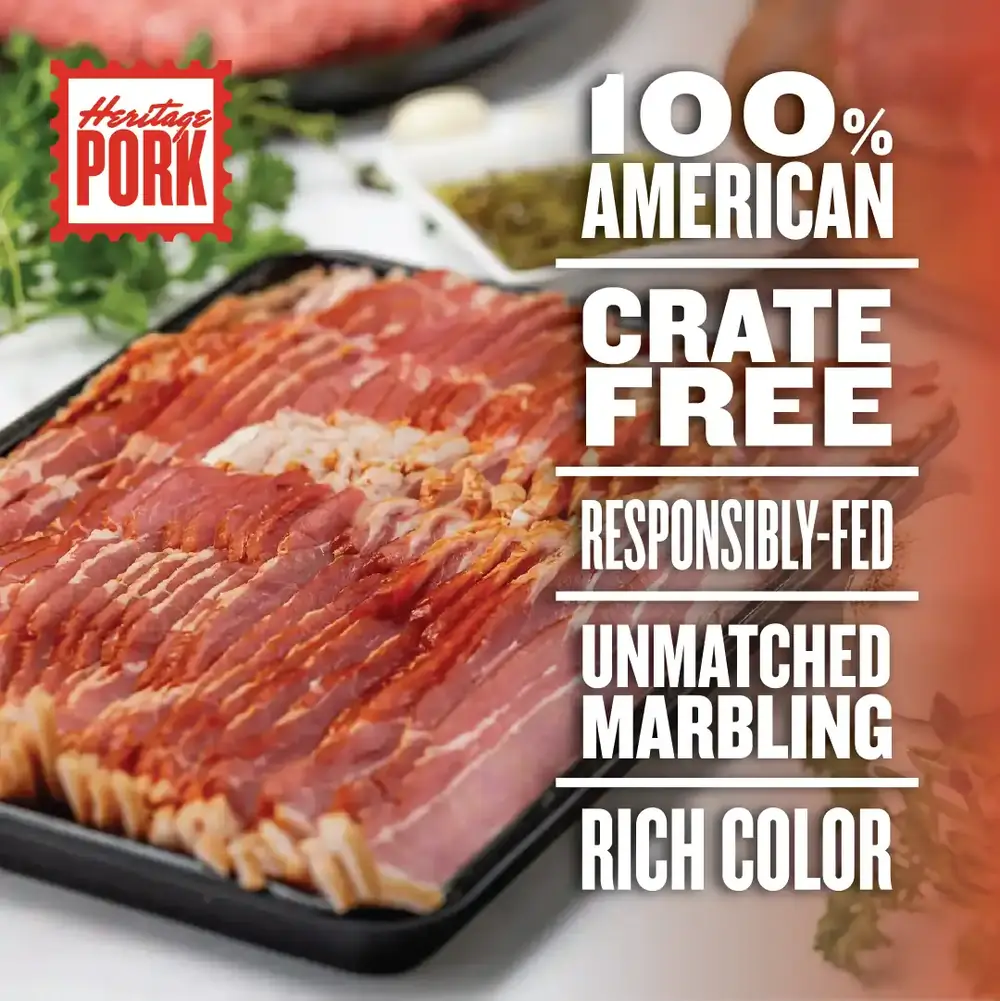
Seafood is wild caught rather than farmed. Across the whole catalog the company states no added hormones, no antibiotics, no seed oils, no fillers and no dyes. Every one of those sentences is published on goodranchers.com, which is the point of this section: they are checkable, and a company that prints them is choosing to be held to them.
What arrivesOne box, and what is actually in it
The Ranchers Classic is the box the company started with and still sells the most of. It is a useful thing to look at because you can count it, unlike a claim.
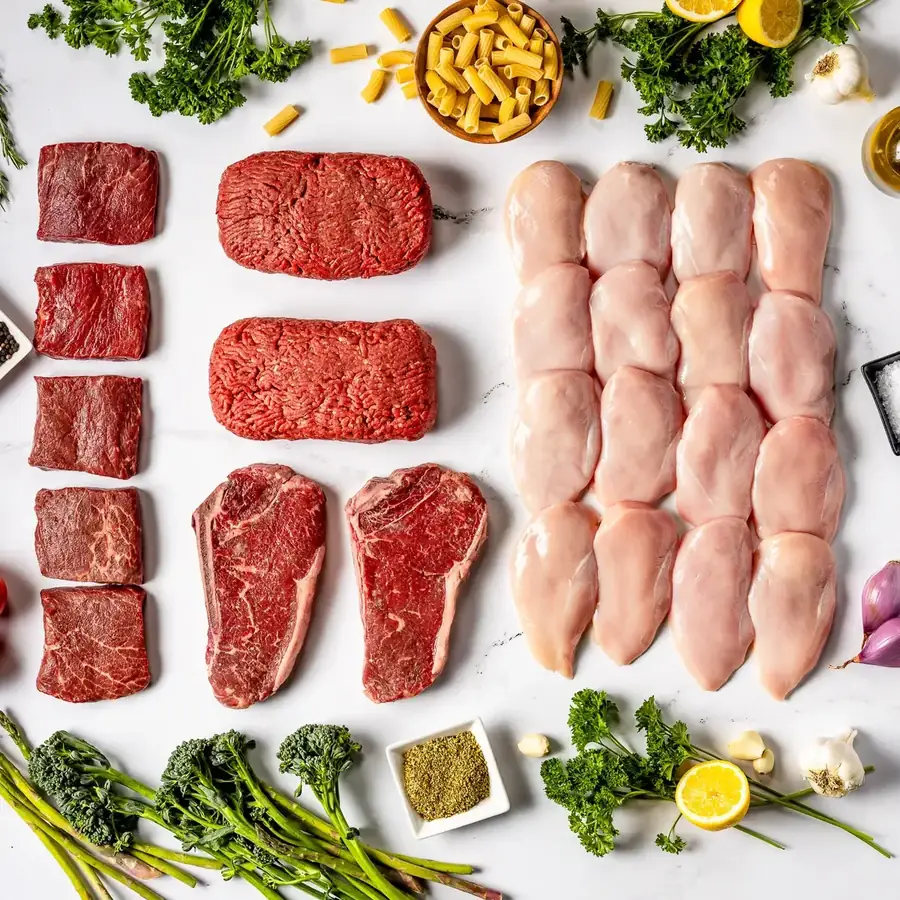
Ranchers Classic
4.6 out of 5 from 6,723 reviews · roughly 32 servings at a five ounce portion
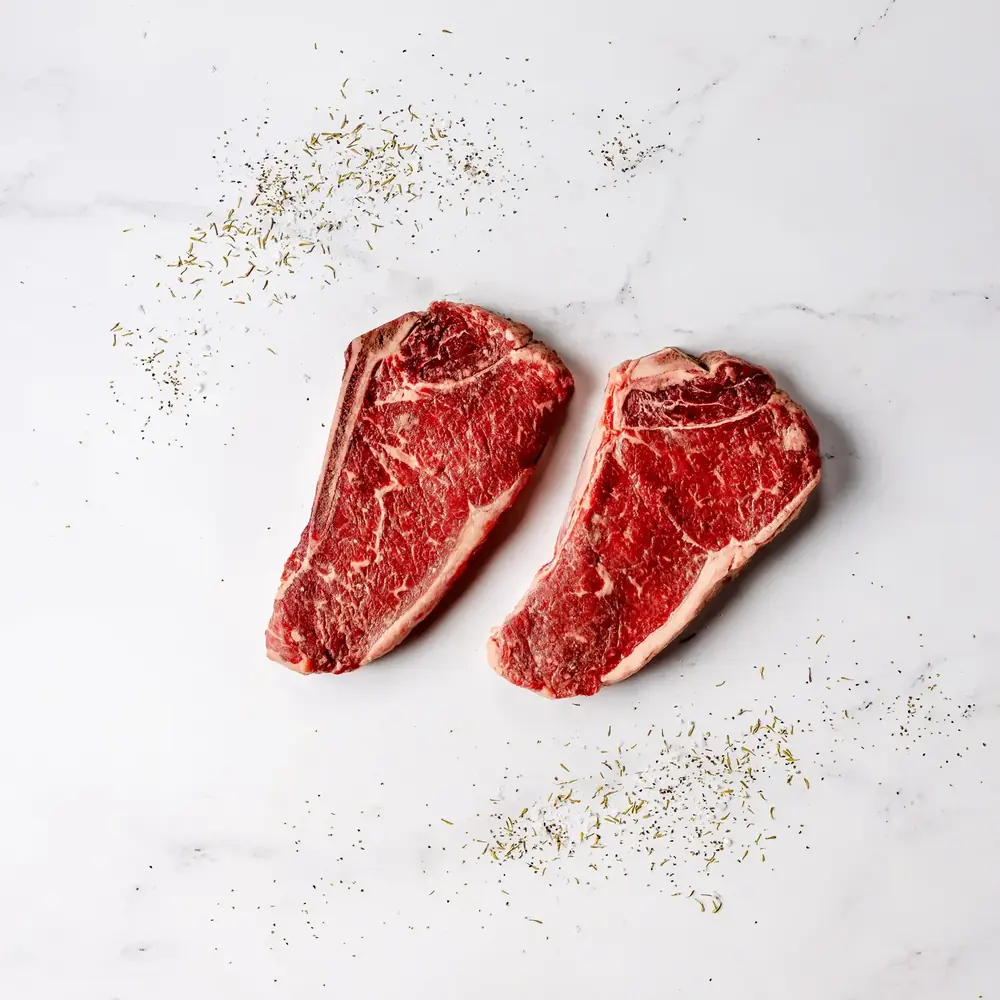
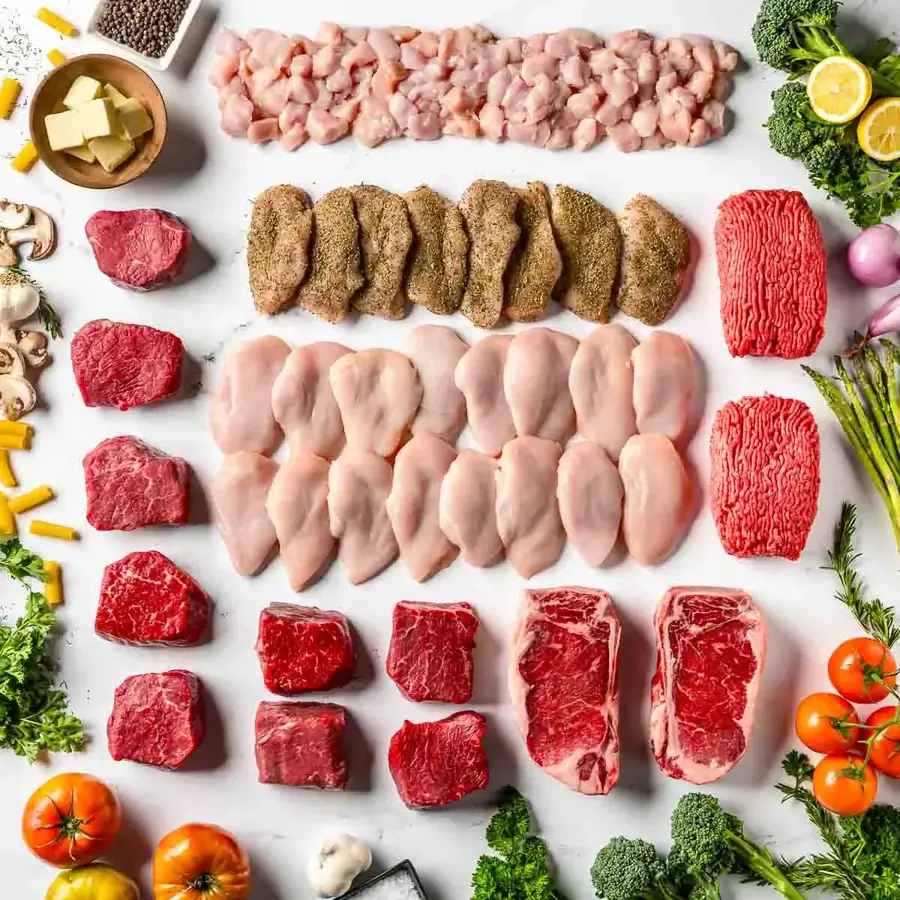
- 2 × 14 oz Bone-In New York Strips
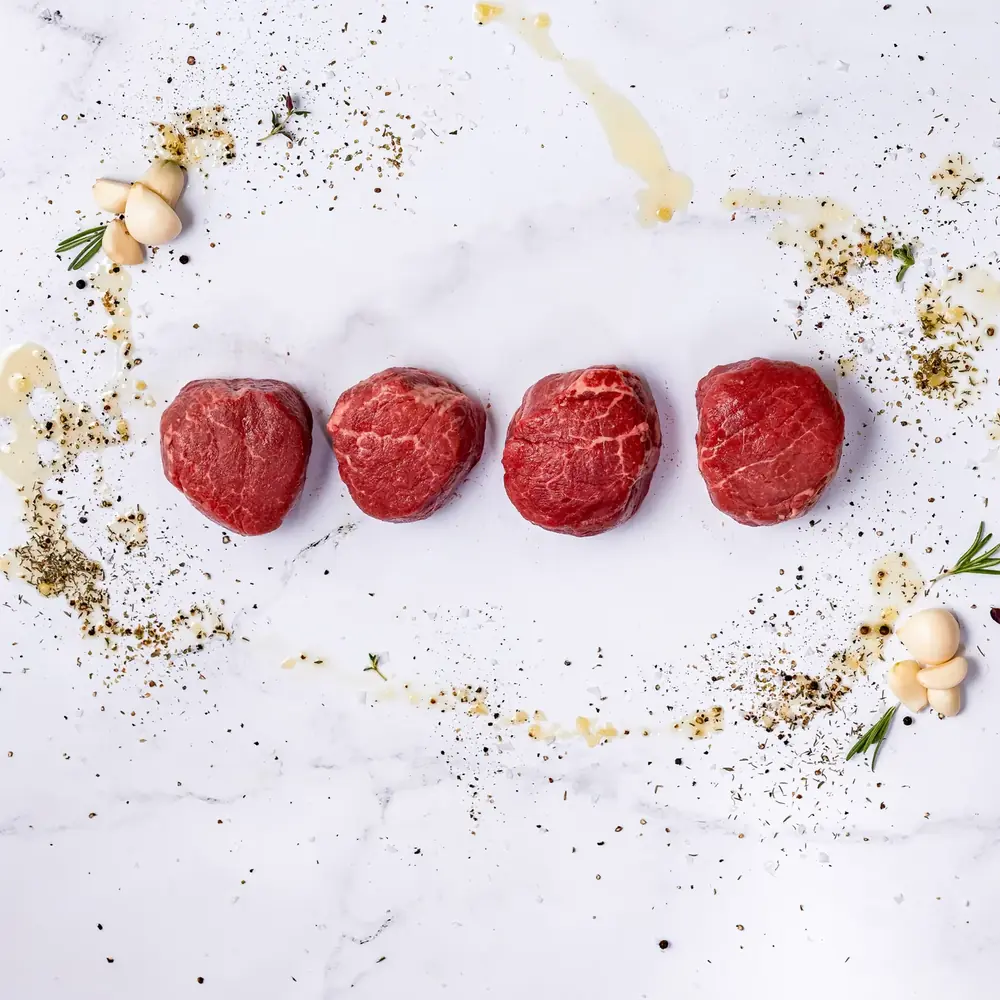
- 5 × 4 oz Flat Iron Steaks
- 2 × 1 lb Angus Ground Beef packs
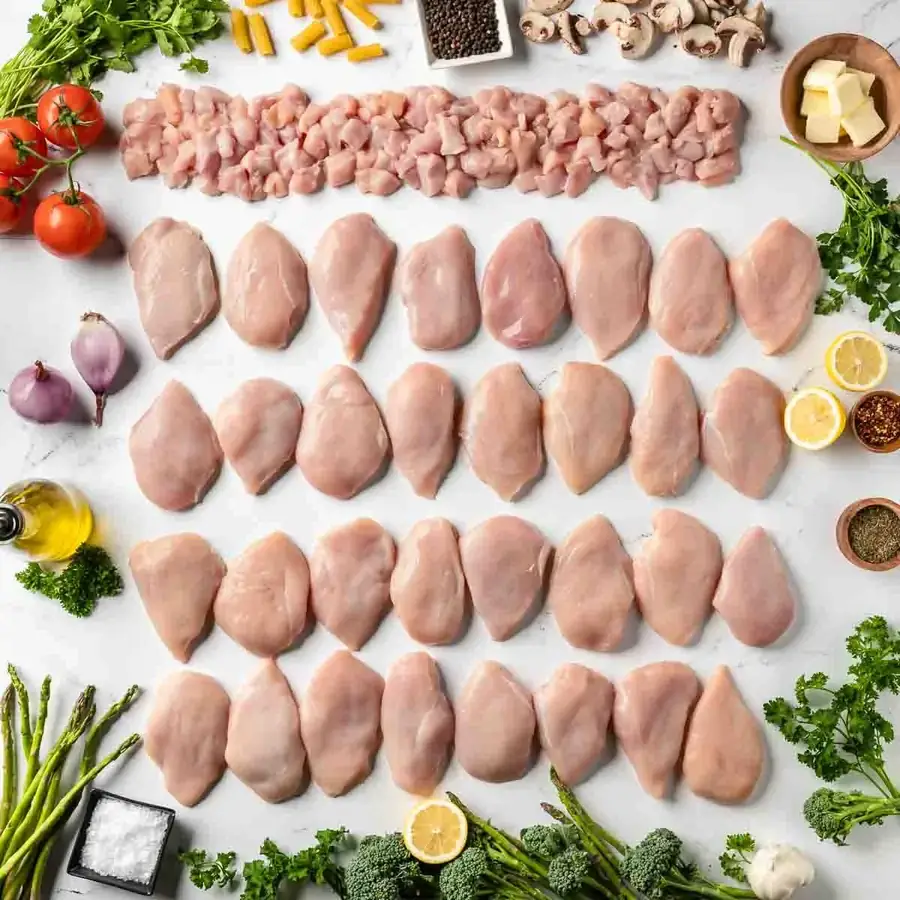
- 16 × 4.5 oz Boneless Skinless Chicken Breasts
Subscription price. Available as a one time order at $244. Free express shipping either way. Prices as published on goodranchers.com on August 14, 2026.
See the Ranchers ClassicOr build your own box from 40+ American cutsSkip, swap or cancel anytime. No phone calls needed.
It arrives the way frozen meat should: hand cut, vacuum sealed piece by piece, packed with dry ice in an insulated box, delivered frozen and ready to go straight into your freezer.

CustomersWhat people say once the box has landed
★★★★★
“Everything arrived perfectly. The ribeye was the best steak we've had in years, and the chicken was tender and delicious.”
Sharon B. · Verified buyer
★★★★★
“The whole family notices the difference in the quality of meat and we will never go back to buying in the supermarket.”
Janice T. · Verified buyer
★★★★★
“Delicious food, fair prices, easy to order, and it arrives on time. Best of all, ordering helps American families and ranches.”
Mary Ann J. · Verified buyer
★★★★★
“Easy to navigate the ordering process, the meat is absolutely fresh, and the customer service is five stars!”
Emily C. · Verified buyer
All four are published on goodranchers.com, where the company reports over 20,000 five star reviews.
Fair objectionsThe four things people actually push back on
It costs more than the supermarket.
Yes. Some of that is the grade and the aging, and some of it is the answer to the question this whole article is about. Nobody at the meat counter is going to give you that answer for free, because nobody is required to have it. If the origin of your food is not something you think about, the supermarket is genuinely cheaper and you should buy there.
I do not have freezer space for a whole box.
Delivery frequency is set by household size, every four weeks for three or more people, every six for two, every eight for one. You can also build a smaller custom box instead of taking a signature one.
I do not want to be locked into a subscription.
The Ranchers Classic is available as a one time order at $244. If you do subscribe, you can skip, swap or cancel from your account without calling anyone.
What if the meat is not as good as the photos?
The company publishes a satisfaction guarantee and a money back guarantee on the front of its own site. That is a promise you can hold them to, which is more than a silent package offers.
In shortRun the test yourself tonight
Go back to the freezer with what you now know.
If the package names a country, good, it told you. If it says Product of USA or Made in the USA, that sentence now carries a federal definition and you can trust the four steps behind it. If it says prepared or packaged in the USA, that is a claim about one step in a plant, not about the animal. And if it says nothing at all, which is what most of them do, then nothing has gone wrong and nobody has broken a rule. You simply were never told, and you were never going to be.
That is the whole argument for buying meat from people who answer the question before you ask it.
Free express shipping. Skip, swap or cancel anytime.